


The principle of laser cutting
Laser cutting is a non-contact processing method. Its working principle is based on the cutting effect of a high-energy-density laser beam. Through the beam focusing system, a high-power-density spot is formed on the surface of the workpiece. The workpiece radiated by the laser will be rapidly heated to the vaporization temperature to form a cavity. Then, the beam focusing position is moved by the servo system to form an extremely narrow cutting seam. Laser Cutting Processing mainly goes through the following steps:
Laser beam generation: The laser in a laser cutting machine produces a high-intensity laser beam, which is usually achieved by exciting a specific medium such as CO2, Nd:YAG or optical fiber.
Beam focusing: The laser beam is guided and focused through a series of optical components (such as mirrors and lenses), ultimately forming an extremely small focal point on the material surface. The laser energy density at this focal point is extremely high.

Material heating and vaporization: When a high-energy-density laser beam is irradiated onto the surface of a material, the material absorbs a large amount of energy in an extremely short period of time and is rapidly heated to the melting or vaporization point. The local temperature of the material can reach several thousand to tens of thousands of degrees Celsius.
When laser cutting, auxiliary gases (such as oxygen, nitrogen or compressed air) need to be ejected coaxially with the laser beam. These gases have three main functions: removing molten or vaporized materials and helping to form the cutting seam. In some cases, such as when using oxygen to cut steel, oxygen can promote combustion reactions, enhance cutting efficiency, have a cooling effect, reduce the heat-affected zone, and maintain the cleanliness and precision of the cutting edge.
Material cutting: As the laser beam and auxiliary gas move, the material is continuously melted and removed, forming a narrow cutting seam. This process is carried out under the control of a computer numerical control (CNC) system to ensure that the material is cut along the preset path and shape.
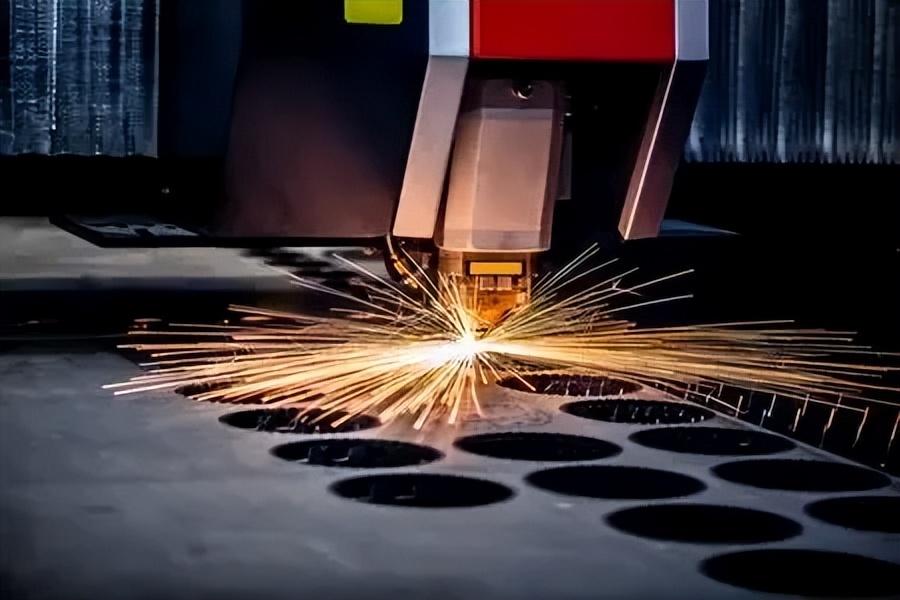
Cutting path control: The entire cutting process is controlled by a computer program. The Laser Cutting Head moves along the predetermined trajectory to complete the cutting of the required shape.
Laser cutting is widely used in the high-precision processing of various materials such as metals, plastics, wood, porcelain, glass and composite materials due to its high precision, high speed, flexibility and wide range of material applicability.